Diploma In Computer Science
By Learnatic Academy
Categories: Faculty of Computing

About Course
The Diploma in Computer Science is a comprehensive, industry aligned programme designed to equip learners with foundational and applied knowledge of computing systems, programming principles, algorithms, and modern software technologies. It provides a structured pathway for understanding how computer systems are designed, developed, and optimized to solve real world problems across industries. As digital transformation continues to reshape global economies, computer science has become one of the most essential disciplines driving innovation, automation, and intelligent systems worldwide.
This diploma explores the core foundations of computer science, including programming fundamentals, data structures, algorithms, computer architecture, operating systems, databases, networking principles, and software development concepts. It is designed to build both theoretical understanding and practical capability, enabling learners to develop logical thinking, computational reasoning, and structured problem solving skills that are essential in modern technology environments.
In addition to academic knowledge, the programme emphasizes practical application through hands on exercises, coding activities, simulations, and real world project development. Learners will gain experience in analyzing problems, designing efficient computational solutions, and implementing software-based systems using industry relevant tools and methodologies. This ensures that learners are not only conceptually strong but also technically competent in applying computer science principles in real scenarios.
The diploma also focuses on developing professional competencies required in the global technology industry. Learners will work on structured assignments and project based learning tasks that simulate workplace environments, enabling them to understand how computing solutions are developed within collaborative and professional settings. These experiences enhance critical thinking, analytical reasoning, teamwork, and technical communication skills.
The programme follows an industry focused and career oriented learning approach aligned with current global standards in computing and software development. It prepares learners for entry level roles in technology, supports career advancement for professionals seeking to upgrade their technical expertise, and provides a strong foundation for freelancing, entrepreneurship, or further academic studies in computer science and related disciplines. Internship opportunities may also be available as part of professional development, offering learners exposure to real industry environments and practical workflows.
Graduates of this diploma may pursue careers in software development, IT support, systems analysis, database administration, web development, and other technology related fields. The programme also enables learners to progress toward advanced studies in artificial intelligence, cybersecurity, data science, software engineering, and cloud computing.
Learnatic Academy provides structured career guidance and professional development support throughout the programme. Through its Hiring and Placement Network, the academy connects qualified graduates with relevant employment opportunities whenever available, helping learners transition effectively into the global technology workforce.
Learnatic Academy is a UK and Singapore Accredited institution and an Approved CPD Provider, recognized by The CPD Group UK, International CPD Standards Board UK, and Online CPD Accreditation Singapore. These accreditations ensure that the programme meets internationally recognized standards of quality, academic integrity, and professional relevance.
Course Content
Module 1: Foundations of Computer Science and Computing Systems
-
Lecture 1: Introduction to Modern Computer Science and Digital Computing Ecosystems
40:02 -
Lecture 2: Evolution of Computing: From Mechanical Machines to Cloud-Based Systems
55:02 -
Lecture 3: Computer Hardware Fundamentals: CPU, Memory Hierarchy, and Storage Systems
01:05:52 -
Lecture 4: Number Systems and Data Representation: Binary, Hexadecimal, and Encoding Standards
48:50 -
Lecture 5: Computer Architecture: Von Neumann Model, Pipelines, and System Design Principles
40:35 -
Lecture 6: Operating Systems Fundamentals: Processes, Threads, and Memory Management
55:32 -
Lecture 7: Windows System Administration: User Management, Services, and System Configuration
45:35 -
Lecture 8: Linux Fundamentals: Command Line Interface, File Systems, and Permissions Management
42:59 -
Project: Computer System Setup and Administration
Module 2: Programming Fundamentals and Problem Solving with Python
Module 3: Computer Networking, Internet Technologies, and Cybersecurity Foundations
Module 4: Software Engineering, Databases, and Cloud Fundamentals
Module 5: Advanced Computing Systems, AI, and IT Operations
Module 6: Enterprise Computer Science and Production Systems
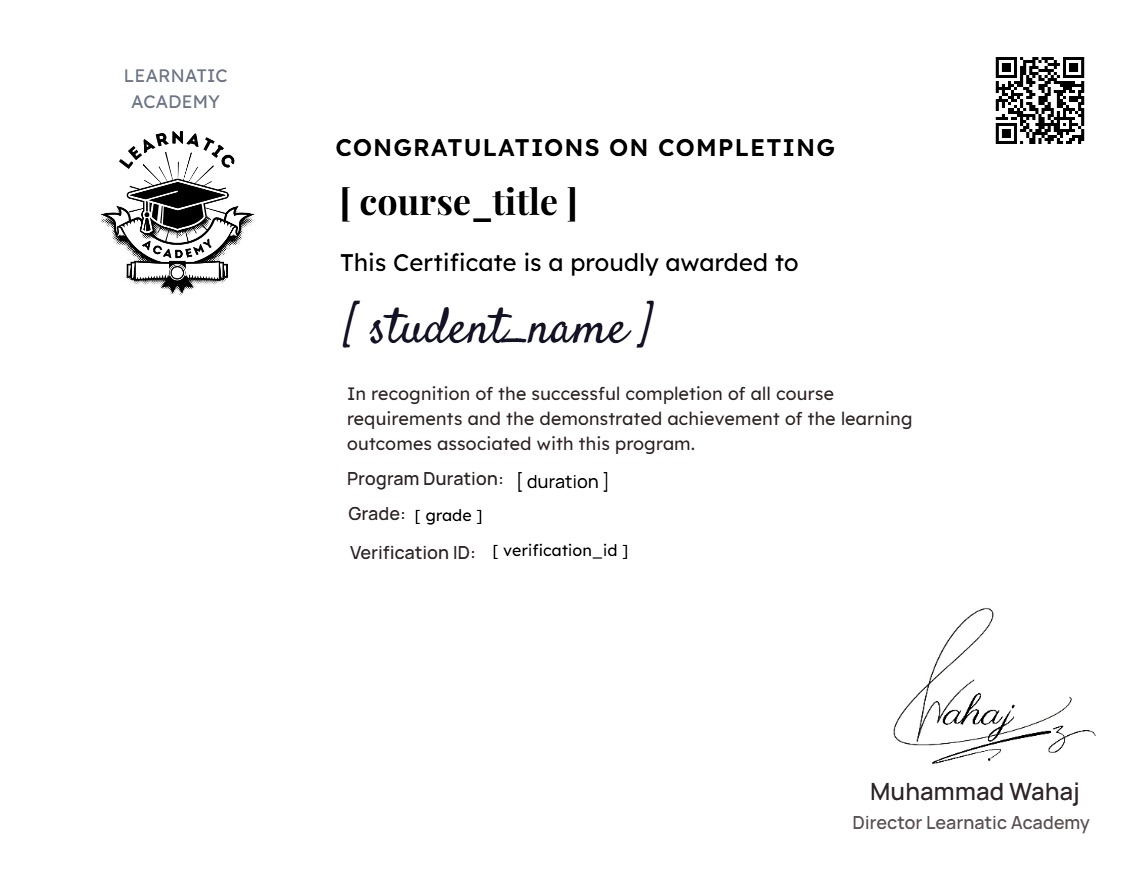
Earned Certificate
Certificates Awarded To Students For Successfully Completing Courses At Learnatic Academy
Student Ratings & Reviews

No Review Yet
Want to receive push notifications for all major on-site activities?
✕